
Commentary on the U.S Election
Markets, Politics, and the Bigger Picture
Good morning,
Yesterday, Americans delivered a decisive political message, with Democrats gaining control of both the House of Representatives and the Senate, marking a significant setback for President Trump and his administration.
For many Canadians, I suspect these results will come as something of a relief. Our relationship with the United States extends well beyond trade. We share a long history of cooperation, economic integration and common interests. Seeing American voters exercise their democratic voice to challenge the direction of their government is a reminder that political accountability remains an important feature of that relationship.
That said, I think we should be careful not to draw too much comfort from a single election.
Despite the Democratic victories, millions of Americans continued to support Republican candidates. The political movement that brought President Trump to power remains an important force in American politics, and the divisions underlying it have not simply disappeared overnight.
For Canadians, and particularly Canadian investors, this is something we need to recognize. The potential for protectionist trade policies, economic nationalism and renewed tensions between our countries should remain part of our long-term investment calculus, regardless of who occupies the White House.
Why Economic Predictability Matters
From an economic perspective, the change in congressional control introduces greater checks and balances in Washington, potentially moderating some of the administration's legislative ambitions.
However, divided government can also bring political gridlock, particularly surrounding taxation, government spending and fiscal policy. Furthermore, President Trump retains considerable executive authority, including over important aspects of international trade.
One of the greatest challenges facing businesses is uncertainty. Companies make decisions about hiring, expansion and capital investment based on expectations for the future. When trade rules, tariffs and regulatory policies are subject to frequent change, those decisions become considerably more difficult.
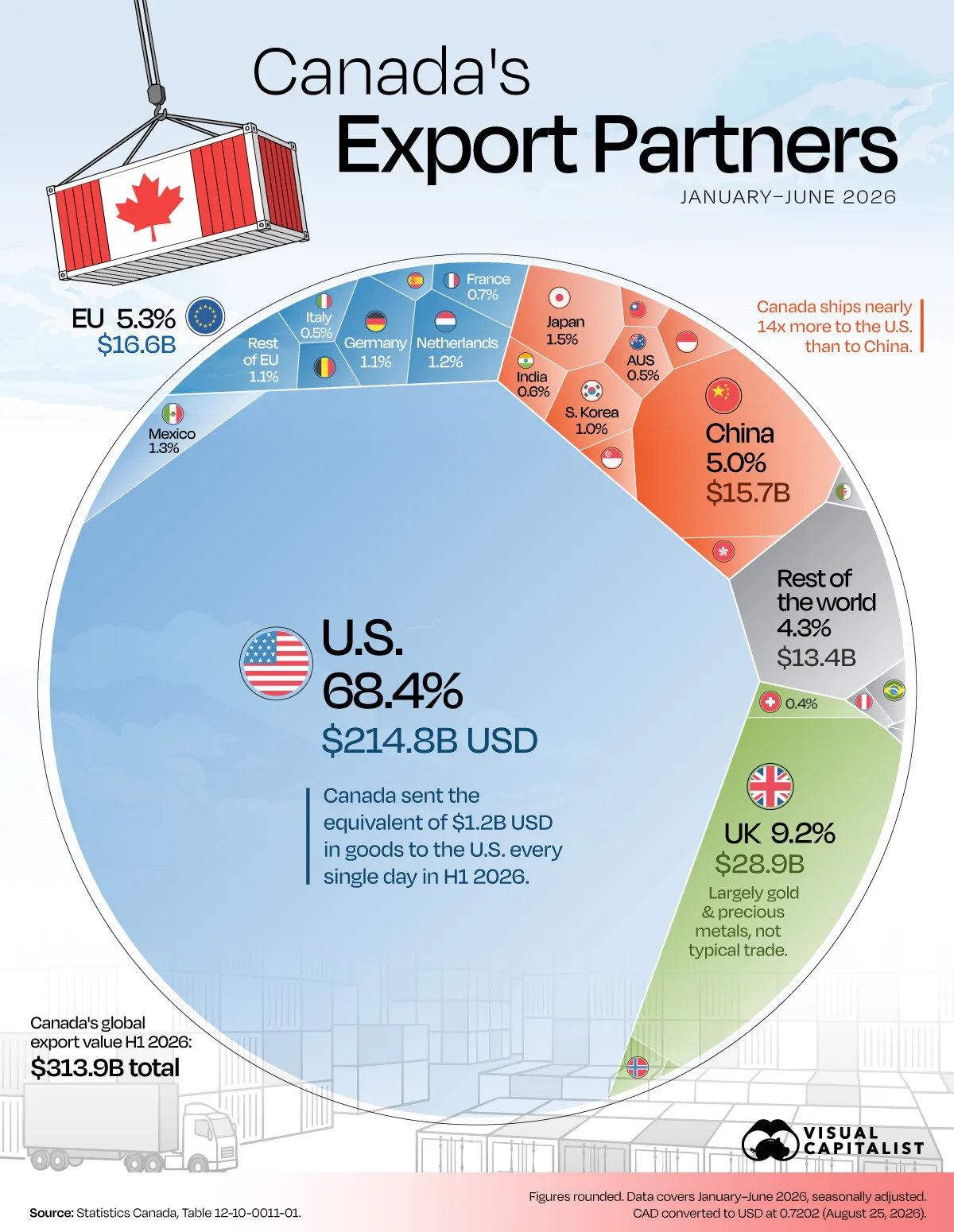
For Canada, the stakes are particularly high. Our economies are deeply intertwined, and uncertainty surrounding our trading relationship can discourage investment on both sides of the border.
We would certainly welcome a return to greater stability, cooperation and predictability, but recognize that rebuilding confidence in our economic relationship will take time.
Putting the Election Into Perspective
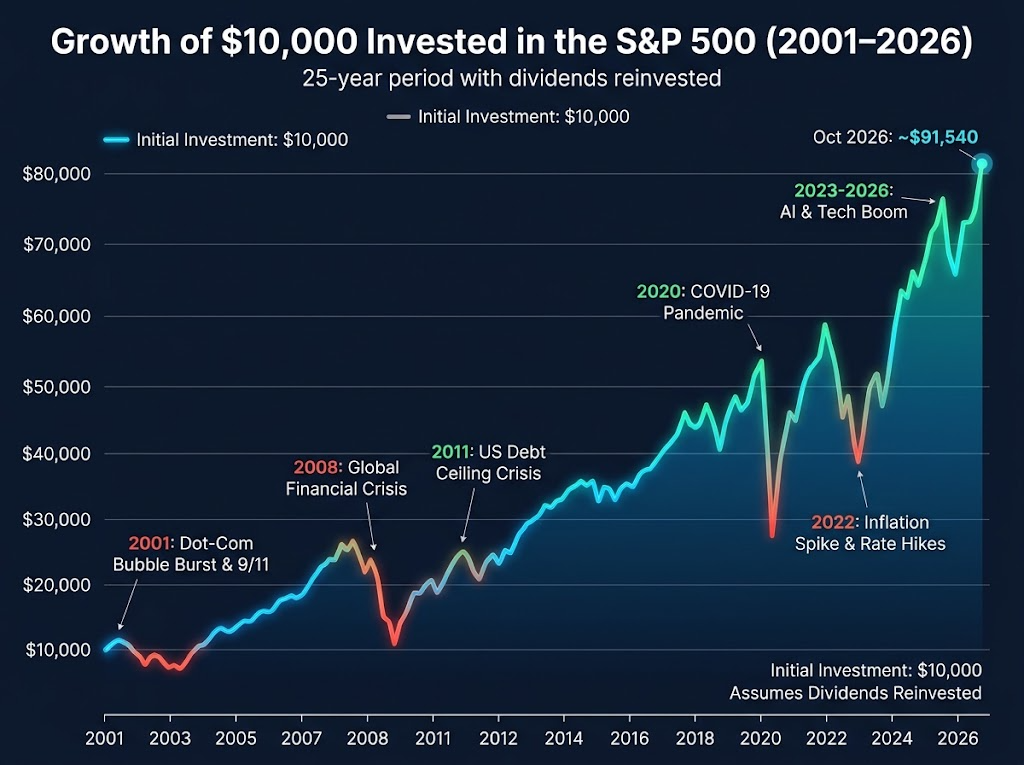
There is a natural tendency to associate election results with investment returns. Investors often assume that one political party will be better for financial markets than another, but history tells a much more complicated story.
In fact, there has never been a shortage of reasons to worry about the future. Over the past 25 years, investors have navigated the technology bubble, September 11, the financial crisis, a global pandemic, inflation and numerous geopolitical conflicts. Each provided legitimate reasons for concern, yet markets have continued to reward patient investors over time. The lesson is not that risks should be ignored, but that uncertainty is a normal part of investing.
Warren Buffett has frequently referenced an observation from his mentor, Benjamin Graham:
"In the short run, the market is a voting machine, but in the long run, it is a weighing machine."
I think that is particularly appropriate today.
Elections can influence investor sentiment and share prices in the short term. Over longer periods, however, it is the profitability and underlying economic value of the businesses we own that ultimately determine investment returns.
What Does This Mean for You?
First and foremost, we do not believe that the outcome of any single election should fundamentally change your long-term investment strategy.
That does not mean we are indifferent to political developments. Government policies influence inflation, interest rates, international trade and ultimately corporate profitability. These are all important considerations in how we manage your investments.
As we have discussed in recent quarterly updates, we made a deliberate decision earlier this year to position our portfolios somewhat more defensively. Following several years of strong equity market returns, we felt that elevated valuations and growing economic uncertainty warranted a more cautious approach.
That decision has come with a trade-off. With equity markets continuing to perform strongly, our portfolios have not fully participated in those gains.
While we recognize that this can be frustrating, we believe there are times when protecting the wealth our clients have accumulated deserves greater emphasis than pursuing every additional percentage point of potential return.
Our flagship Tactical Asset Allocation Pool continues to employ our barbell approach, combining investments in profitable businesses with defensive holdings intended to provide greater stability and diversification.
We continue to favour select companies positioned to benefit from long-term productivity improvements, including artificial intelligence. At the same time, our investments in infrastructure, energy and other real assets provide exposure to different economic opportunities and risks.
We have also maintained cash reserves and defensive positions, giving us the flexibility to respond should market volatility create attractive investment opportunities.
After several particularly strong years for financial markets, we believe a more cautious posture remains appropriate. We cannot predict when volatility will return, but periods of uncertainty often create opportunities for disciplined investors. That flexibility to adjust our investments as opportunities emerge is the very principle behind the name of our flagship Tactical Asset Allocation strategy.
Ultimately, our responsibility is not to predict the next election or geopolitical event. It is to manage your investments thoughtfully through whatever circumstances arise, while remaining focused on your long-term financial objectives.
We are encouraged by the prospect of greater political accountability and would welcome a more predictable economic relationship between Canada and the United States. However, we remain mindful that the underlying challenges have not disappeared.
As always, our team is here to navigate these changing conditions on your behalf.
Thank you for your continued trust and the opportunity to be of service.
This publication is for informational purposes only and shall not be construed to constitute any form of advice. The views expressed are those of the author alone. Opinions expressed are as of the date of this publication and are subject to change without notice and information has been compiled from sources believed to be reliable. This publication has been prepared for general circulation and without regard to the individual financial circumstances and objectives of persons who receive it. You should not act or rely on the information without seeking the advice of the appropriate professional.
Aligned Capital Partners Inc. (“ACPI”) is a full-service investment dealer and a member of the Canadian Investor Protection Fund (“CIPF”) and Canadian Investment Regulatory Organization (“CIRO”). Investment services are provided through ACPI (or) Innova Wealth Management, (if applicable) an approved trade name of ACPI. Only investment-related products and services are offered through ACPI/Innova Wealth Management and covered by the CIPF. Financial planning and insurance services are provided through Innova Wealth Partners. Innova Wealth Partners is an independent company separate and distinct from ACPI/Innova Wealth Management.
- Hits: 58